
Design your polished concrete floor
Choose a sheen level, an aggregate exposure, and a dye color, then preview the floor and send the spec with your bid request. Below the designer, we explain what each choice means on a real slab.
1. Sheen
2. Aggregate exposure
3. Dye color
Every photo is a real AllStar floor. Sheen levels and dye colors are simulated on those photos, and your slab will vary. We confirm color with manufacturer samples and a test area on your floor. See our polished concrete color chart.
Polished concrete sheen levels
Sheen comes from how far we refine the floor through progressively finer diamond grits. The four levels below follow the CPAA classification, so the level in your spec means the same thing on the floor.
01
Ground
Up to about 80 grit
Flat, with no reflection. The slab is ground and densified.
Warehouses, back-of-house, and areas where function matters more than shine.
02
Honed
About 150 to 400 grit
A satin sheen with soft, low-glare reflection.
Schools, offices, and corridors where glare is a concern.
03
Semi-polished
About 800 grit
Clear reflection. Overhead lights show up crisply in the floor.
Retail, lobbies, and restaurants.
04
Highly polished
About 1500 to 3000 grit
High gloss with near mirror-like clarity.
Showrooms, high-end retail, and statement spaces.
Aggregate exposure options
How deep we grind decides how much of the stone shows. Cream is the most consistent. Past the cream, how evenly the aggregate shows depends on how flat and well finished the slab is, so we always confirm the look on a test area before production grinding.
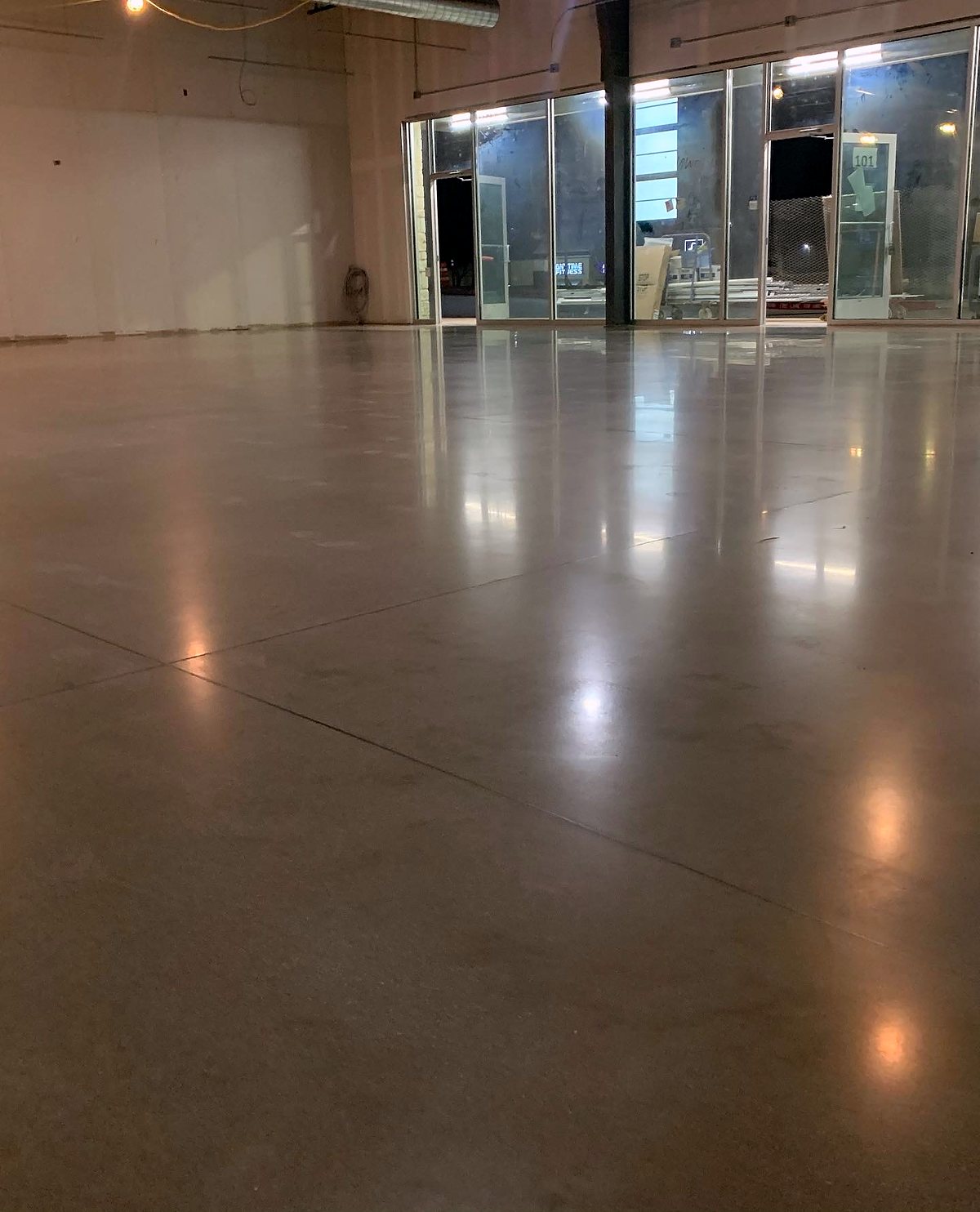
Cream
Only the top surface of the slab is refined, with little to no stone showing. It is the most uniform and predictable finish, and the most economical.

Salt and pepper
A light cut exposes fine aggregate in a speckled pattern. Getting it even depends on a flat, well-finished slab, so some natural variation is normal.
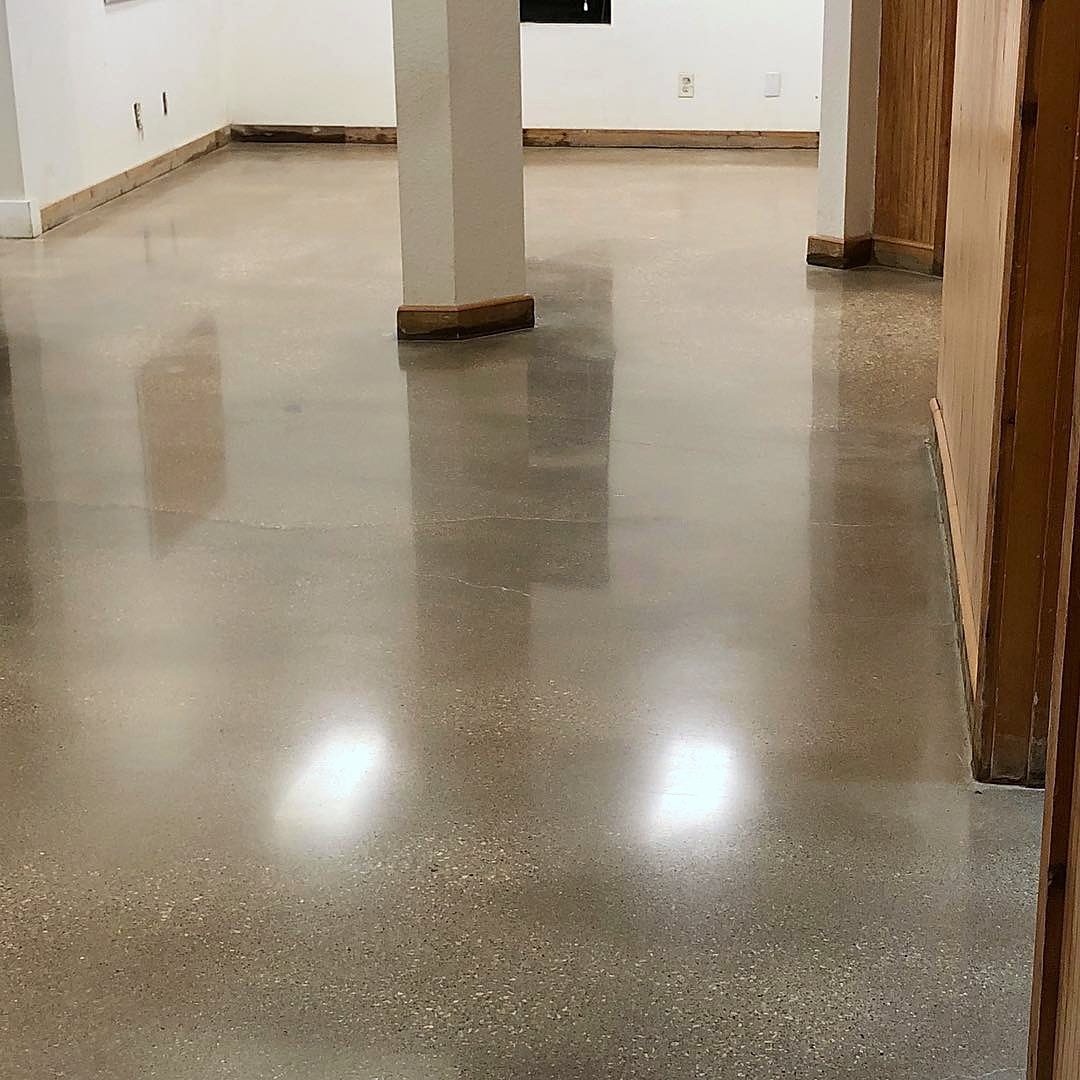
Medium aggregate
A deeper cut brings out more of the stone. Once we cut past the cream, exposure always varies across the floor, and that variation is part of the character.
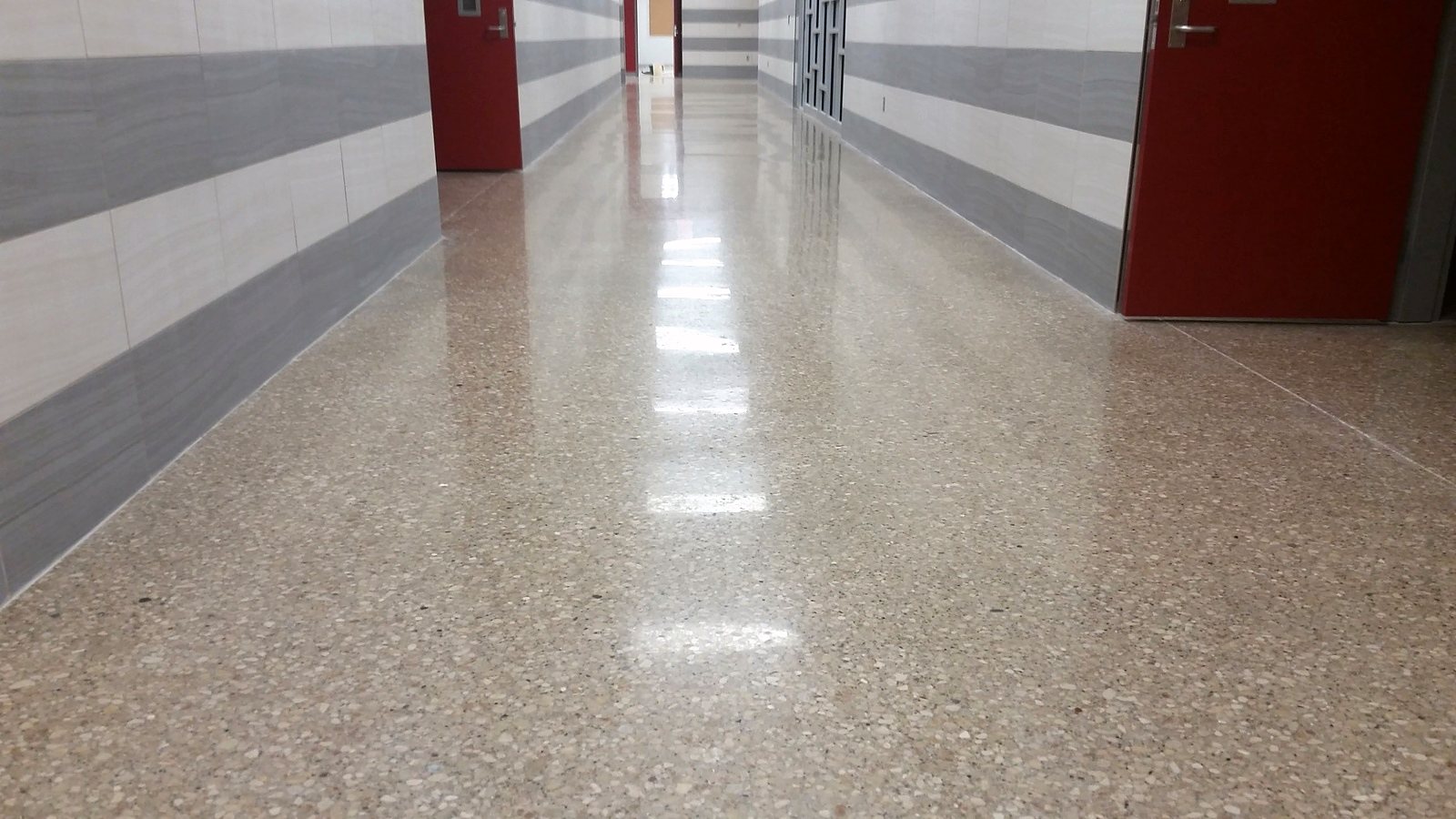
Exposed aggregate
A full cut shows the larger stone across the floor. On a well-placed slab, 85 to 90 percent even exposure is a realistic target. A perfectly uniform floor takes a near-perfect pour.
Choosing a dye color
Concrete dye colors the cement paste in the surface of the slab. The stone keeps its natural color, which is why the same dye looks different over cream, salt-and-pepper, and exposed-aggregate floors.
Every slab takes color a little differently, depending on the mix, its age, and how it was finished. We confirm the color with physical samples from the manufacturer’s dye chart and a test area on your floor before we dye the whole space.
Dyes can also be combined with saw-cut scoring, bands, borders, and logos for wayfinding or branding.
See the Color ChartQuestions about color and sheen
Polished Concrete ServiceCan you match our brand color?
We can usually get close. We start from the manufacturer’s dye colors and do a test area so you can approve the color on your actual slab.
Will a dyed floor fade?
Some dyes hold up to sunlight better than others. For floors in direct sun, we use a UV-stable dye system and test before we commit.
Can you change the color of an existing polished floor?
Often, yes, but the surface usually has to be reopened so the new dye can penetrate. We will evaluate the floor and tell you what it takes.
Which sheen level should we choose?
Match it to the space. Honed floors keep glare down in schools and offices. Semi-polished and highly polished floors suit retail and lobbies. We can show samples.
Is the designer preview exact?
No. It shows the general look of each choice. Final color and texture depend on your slab, which is why we confirm with samples and a test area.
Ready to price your floor?
Send your spec from the designer along with the plans and finish schedule. We will confirm the details and get you a complete number.