
Service · Polished concrete
Polished concrete floors
We grind and polish concrete floors for schools, warehouses, retail, restaurants, and offices across Texas. Bid to your plans and spec, polished to the grit and sheen the job calls for.
Since
2005
Built for
Schools, warehouses, retail, offices
Serving
Austin and all of Texas
2005
In business since
4M+
Sq ft installed, all systems
300+
Projects completed
5
States worked in
What it is
Polished concrete is the slab itself, ground flat with diamond tooling and hardened with a densifier. There is no topical coating to peel, flake, or scratch through.
Done right and maintained, it outlasts almost any floor you can put over concrete, and daily care comes down to a dust mop and a neutral cleaner. We bid to your plans and spec and polish to the grit and sheen the job calls for.
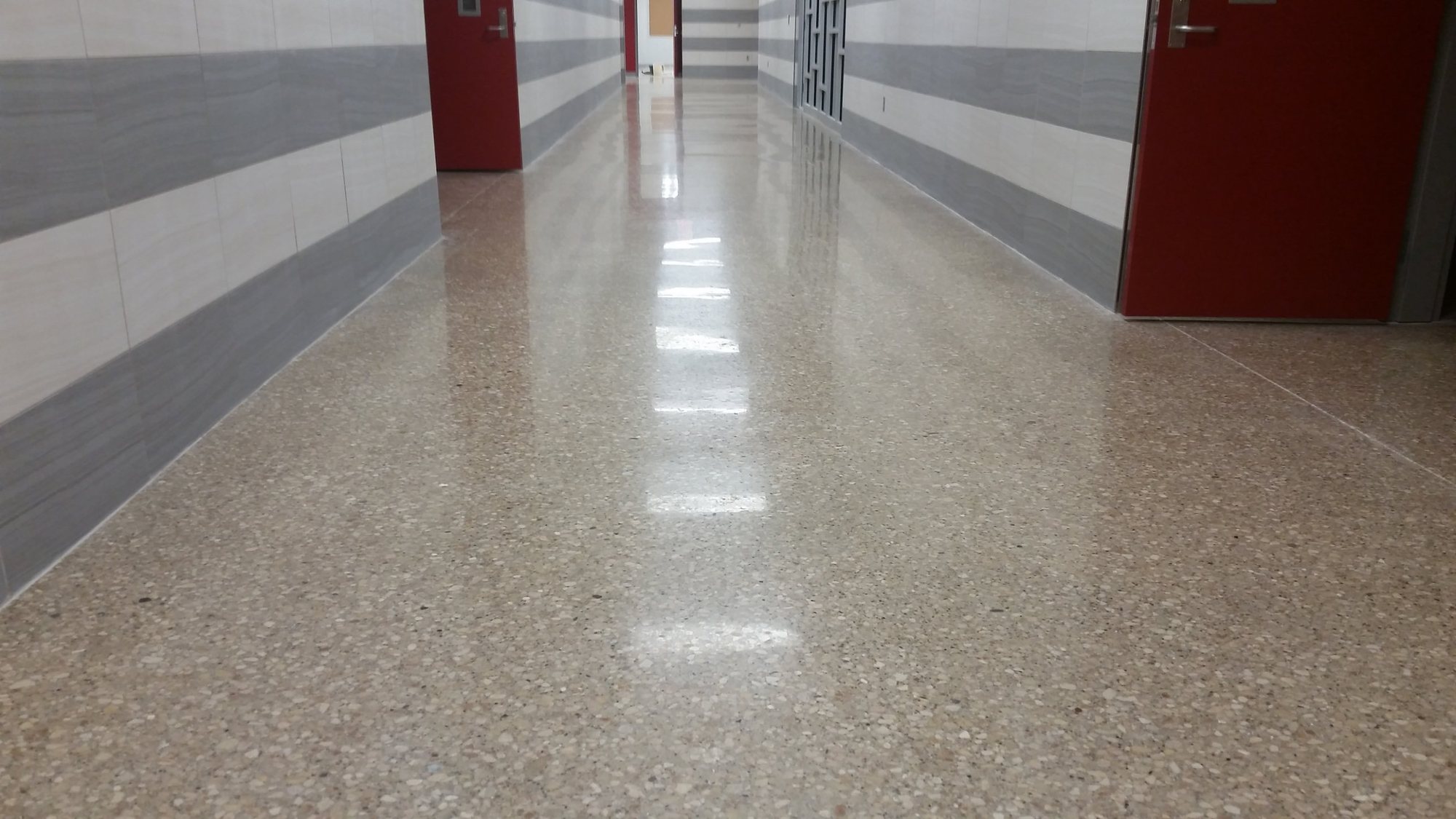
Large exposed aggregate, Odessa High School
Who it is for
Polished floors for commercial buildings
From school corridors to distribution centers, we polish floors that take daily traffic and still look clean at the end of the day.
Floor designer
Design your floor on real AllStar jobs
Pick a sheen, an aggregate exposure, and a dye color. Every photo is a floor we polished. When it looks right, send the spec with your bid request.
1. Sheen
2. Aggregate exposure
3. Dye color
Every photo is a real AllStar floor. Sheen levels and dye colors are simulated on those photos, and your slab will vary. We confirm color with manufacturer samples and a test area on your floor. See our polished concrete color chart.
Process
How we polish a floor
01
Evaluate the slab
We check cure time, flatness, patching, cracks, and porosity before we price the work.
02
Grind
Metal-bond diamonds flatten the surface and open the slab to the aggregate exposure you chose.
03
Fill joints
We clean and fill control joints after the grind and before polishing, in standard gray or a color you approve.
04
Densify
A densifier hardens the surface and dust-proofs it, so the chalky look of untreated concrete goes away.
05
Polish
Resin-bond diamonds take the floor through each grit up to the specified sheen.
06
Guard and test
A guard adds stain resistance, and we can measure slip resistance (DCOF) when the project requires it.
Want this on your project? We bid to your plans and spec.
For architects and estimators
Built to your plans and spec
Specified finish
Gloss level, aggregate exposure, and dye color matched to the spec, typically 03 35 43 Polished Concrete Finishing.
Mockups and samples
A mockup or approved sample area before production, so the owner and architect sign off on the look.
Slab conditions
Existing coatings, adhesives, patches, and cracks assessed and addressed before polishing starts.
Joints and cracks
Joint filling and crack treatment to the specified material and timing.
Phasing and trades
Work sequenced around other trades and released areas, including occupied buildings.
Closeout
Final cleaning, protection guidance, and maintenance instructions for the owner.
Systems we install
Densifiers, dyes, and guards from the major manufacturers, matched to the spec. See the manufacturers we install.
From Google reviews
“
I called around to get someone to polish a new 5,200 sq ft slab and I always felt like I was talking to a salesperson instead of a tradesperson. Jason was a breath of fresh air because I was talking to the guy who was going to do the work.
Graham S. · New slab, polished
“I’m the owner of a design-build office and we always use AllStar for concrete polishing. They are detail oriented but also can provide more economical solutions if necessary.”
Laura M.
Design-build office owner
“As an architect I’m pretty picky. Jason and his team didn’t let me down. Our studio floor is beautiful!”
Kit J.
Architect
“AllStar was an excellent company to work with. There are very few companies in the area that can handle their scope of work.”
Dustin G.
Client
Before
Is your slab a good candidate?
Most concrete can be polished, including older floors coming out from under VCT or carpet.
New slabs should cure about 28 days. If the slab was wet-cured and the weather cooperates, we can sometimes start in 10 to 14 days.
Smooth, flat slabs need less grinding, especially when the spec calls for minimal aggregate exposure.
Wavy, heavily patched, or very porous slabs may not be good candidates. We will tell you up front if a coating or overlay is the better call.
After
Keeping it looking new
We can train in-house cleaning crews and set you up with the right products.
Dust mop or microfiber daily.
Clean with a pH-neutral cleaner made for polished concrete, followed by clean water.
On larger floors, high-grit diamond pads on an auto scrubber maintain the shine.
If the sheen dulls, we can come back with the finishing grits and restore it.
Polished concrete or epoxy?
Polished concrete usually wins on lifecycle cost and maintenance for retail, schools, and warehouses. Epoxy and resinous systems are the better choice where you need chemical resistance, a seamless sanitary surface, or a solid color.
Read the comparison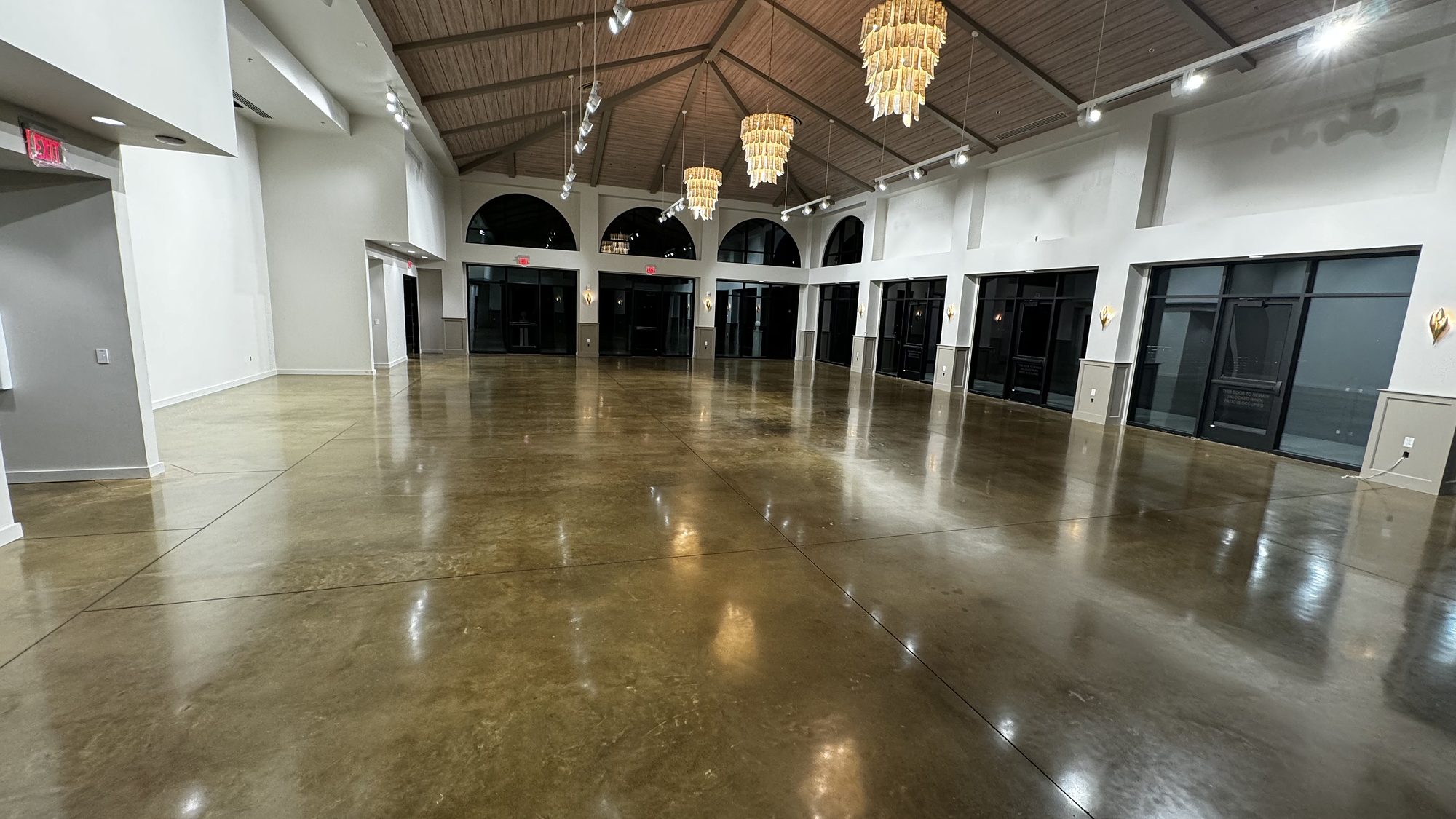

Questions
Is polished concrete slippery?
Kept clean and dry, polished concrete is less slippery than polished marble or waxed vinyl, even at a high sheen. Clean up spills quickly, keep grit off the floor, and mark wet areas.
Does polished concrete help with LEED?
It can. Polishing reuses the existing slab, and low-emitting densifiers and guards may count toward material and indoor air quality credits. Check your project’s LEED requirements.
Can you polish an old floor?
Usually, yes. After flooring removal, we grind off adhesive and coatings, repair cracks and spalls, and polish what remains.
Can you fill the joints?
Yes. We clean and fill control joints after the grind and before polishing, in standard gray or a color you approve.
How long does it take?
It depends on square footage, aggregate exposure, and sheen level. We build the schedule around your phasing and the other trades.
Ready to price your floor?
Send the plans, finish schedule, and spec sections. We review the scope, flag prep and joint work up front, and get you a complete number.